

Razadyne ER (Galantamine)

Author , posted on July 5, 2017

Category:


Razadyne ER

Galantamine Hydrobromide

Select Quantity:
Select Quantity:
Select Quantity:

Razadyne ER

Galantamine Hydrobromide

Select Quantity:

Reminyl ER

Galantamine Hydrobromide

Select Quantity:

Galantamine XL (Generic)

Galantamine Hydrobromide

Select Quantity:
Select Quantity:
Select Quantity:

Galantamine ER (Generic)

Galantamine Hydrobromide

Select Quantity:
Select Quantity:
Select Quantity:

Razadyne ER (Galantamine) Medication Information

Uses

Razadyne is a cholinesterase inhibitor that is used to treat mild to moderate dementia caused by Alzheimer’s.

Dosage

The capsules are available in several different strengths:

  • 8 mg
  • 16 mg
  • 24 mg

Side Effects

The most common side effects of Razadyne include:

  • Nausea
  • Vomiting
  • Diarrhea
  • Decreased appetite
  • Weight loss
  • Dizziness
  • Headache 

Speak with your doctor for a full list of side effects that apply to you if you are taking Razadyne.

Precautions

There is a possibility of serious skin reaction, if a rash develops while taking Razadyne, seek medical attention.

There is a risk of gastrointestinal bleeding with Razadyne, because of stomach ulcers. 

In patients with severe asthma or obstructive pulmonary disease, they should be monitored for breathing problems with Razadyne. 

Interactions

The most common drug interactions with Razadyne include:

  • Anticholinergic medications
  • Succinylcholine
  • Neuromuscular blocking agent
  • Cholinergic agonists

Speak with your doctor for more information and before starting a new medication with Razadyne. 

Storage

Store at room temperature (77ºF). 

Pharmacist Tips

  • Razadyne can cause a serious skin rash, if a rash develops seek immediate medical attention. 
  • The extended-release capsule of Razadyne should be taken once a day.
  • It is important to ensure that patients drink enough fluid while taking Razadyne.

Galantamine FAQs

What are the side effects of Razadyne?

The most common side effects seen with Razadyne are nausea, vomiting, loss of appetite, dizziness, and drowsiness. 


How long can you take Razadyne?

Razadyne can be continued throughout treatment for dementia. 


How does Razadyne work?

Razadyne increases the amount of acetylcholine in the brain to aid in the communication between nerve cells in the brain. 


How does Razadyne affect a person with dementia?

Razadyne can increase the amount of acetylcholine which is needed for the brain to work properly. 


Is Alzheimer’s curable?

At this time, there is no cure for Alzheimer’s. 


Related Drugs

Reference:

Razadyne ER {package insert}. Titusville, NJ: Janssen Pharmaceuticals, Inc.; 2015.

https://www.accessdata.fda.gov/drugsatfda_docs/label/2015/021615s021lbl.pdf

PharmD Medical Writer

Author: Dr. Larisa Roybal, PharmD

Dr. Roybal is a board-certified pharmacotherapy specialist who has practiced in both ambulatory and acute care settings. Her pharmacy interests include oncology and general inpatient pharmacy.


Zofran Syrup (Ondansetron)

Author , posted on July 5, 2017

Category:


Ondansetron Syrup (Generic)

Ondansetron

Select Quantity:

Zofran (Ondansetron) Dosage and Side Effects

Doctors sometimes prescribe Zofran to treat nausea and vomiting caused by cancer treatments such as chemotherapy and radiation therapy.  Zofran also can treat nausea and vomiting after surgery.  The drug may also help prevent the common complication of shivering in people who have had anesthesia.

Proper Use of this medication

The label on the container of your medicine should tell you how often to take your medicine and how many doses you should take each time. If not, or if you are not sure, consult your doctor or pharmacist.

Do not take more doses, or take them more often than your doctor prescribes. If, however, you vomit within one hour of taking your medicine, you should take the same amount of medicine again. If vomiting persists, consult your doctor.

For ZOFRAN ODT orally disintegrating tablets:

Do not try to push ZOFRAN ODT through the lidding foil.

Tear along the perforations of the foil to separate off one tablet within its blister unit.

Peel back the foil at the place indicated by the arrow.

Gently push the ZOFRAN ODT out of the blister pocket, and remove it with dry fingers.

Place the ZOFRAN ODT on top of the tongue. It will dissolve very quickly.

Swallow as normal.

Usual dose:

Chemotherapy Induced Nausea and Vomiting:

Based on how likely you are to experience nausea and/or vomiting, caused by your cancer treatment, your doctor will tell you the amount you need to take and how frequently.

Adult: You may receive ZOFRAN before and/or after chemotherapy. The dose of ZOFRAN is between 8 and 24 mg a day (taken orally) for up to 5 days depending on the potential of your chemotherapy treatment to cause you to vomit and/or have nausea.

Children (4 to 12 years): After chemotherapy, take 4 mg orally every 8 hours for up to 5 days.

Radiotherapy Induced Nausea and Vomiting:

Adult: Take 8 mg orally 1 to 2 hours before radiotherapy. After therapy, take 8 mg orally every 8 hours for up to 5 days after a course of treatment.

Prevention of Post-Operative Nausea and Vomiting:

Adult: Take 16 mg orally one hour before anaesthesia.

If you have a liver problem, your dose may be altered. Please follow the instructions of your doctor.

Overdose:

In case of drug overdose, contact a health care practitioner, hospital emergency department or regional Poison Control Centre immediately, even if there are no symptoms.

Missed dose:

If you miss a dose and do not feel sick, take the next dose when it is due.

If you forget to take your medicine and feel sick or vomit, take a dose as soon as possible.

If your doctor decides to stop the treatment, do not keep any left over medicine unless your doctor tells you to.

Side Effects

You may experience headaches, a feeling of warmness, flushing or constipation, while taking ZOFRAN. Although uncommon, low blood pressure and hiccups have also been reported.

There is no need to stop taking your medicine, but you should tell your doctor about these symptoms at your next visit.

If your nausea (feeling of sickness) or vomiting do not improve while taking ZOFRAN, consult your doctor for further advice.

If you feel unwell or have any symptoms that you do not understand, you should contact your doctor immediately.

Warnings and Precautions

BEFORE you use ZOFRAN or ZOFRAN ODT talk to your doctor or pharmacist if:

  • you have a history of hypersensitivity (an allergic reaction) to any ingredient in ZOFRAN or ZOFRAN ODT.

  • if you have had an allergic reaction to medicines similar to ZOFRAN or ZOFRAN ODT such as medicines containing granisetron or palonosetron.

  • you are pregnant or likely to become pregnant.

  • you are breast feeding.

  • you have liver problems.

  • you have signs of intestinal obstruction.

  • you have a history of heart problems.

  • you have a condition called phenylketonuria and were prescribed ZOFRAN ODT, because it contains aspartame.

If you experience wheezing and tightness of the chest, heart throbbing, swelling of eyelids, face or lips, or develop a skin rash, skin lumps or hives, contact your doctor immediately. Do not take anymore medicine unless your doctor tells you to do so.

Serotonin Syndrome is a rare but potentially life-threatening reaction that may occur if you take ZOFRAN or ZOFRAN ODT with certain other medications. It may cause serious changes in how your brain, muscles and digestive system work. Be sure to tell your healthcare professional all the medicines you are taking.

Interactions with this medication

As with most medicines, interactions with other drugs are possible. To avoid potentially life-threatening reactions tell your healthcare professional about ALL the medications you take, including those prescribed by other doctors, vitamins, minerals, natural supplements or alternative medicines. It is important that your doctor know about all your medication so that you get the best possible treatment. Tell your doctor if you are taking carbamazepine, phenytoin, or rifampicin. If you are taking any medicines containing tramadol, ZOFRAN may decrease its effectiveness.

Also, make sure you tell your doctor or pharmacist if you are taking:

  • Drugs used to treat heart rhythm disorders

  • Other drugs that may disturb heart rhythm

  • Antipsychotics

  • Antidepressants

  • Antibiotics or antifungals

  • Opioid analgesics (painkillers)

  • Other drugs to treat nausea and vomiting

  • Asthma drugs

  • Cancer drugs

  • Diuretics

  • Other drugs that affect serotonin including SSRIs, SNRIs§, triptans, MAOIs (including the antibiotic linezolid and methylene blue), drugs that contain tryptophan, or St. John’s Wort.

Other related products

Zofran ODT (Ondansetron)

Author , posted on July 5, 2017

Category:


Zofran ODT

Ondansetron

Select Quantity:

Zofran ODT

Ondansetron

Select Quantity:

Zofran ODT

Ondansetron

Select Quantity:
Select Quantity:

Ondansetron ODT (Generic)

Ondansetron

Select Quantity:
Select Quantity:

Zofran (Ondansetron) Dosage and Side Effects

Doctors sometimes prescribe Zofran to treat nausea and vomiting caused by cancer treatments such as chemotherapy and radiation therapy.  Zofran also can treat nausea and vomiting after surgery.  The drug may also help prevent the common complication of shivering in people who have had anesthesia.

Proper Use of this medication

The label on the container of your medicine should tell you how often to take your medicine and how many doses you should take each time. If not, or if you are not sure, consult your doctor or pharmacist.

Do not take more doses, or take them more often than your doctor prescribes. If, however, you vomit within one hour of taking your medicine, you should take the same amount of medicine again. If vomiting persists, consult your doctor.

For ZOFRAN ODT orally disintegrating tablets:

Do not try to push ZOFRAN ODT through the lidding foil.

Tear along the perforations of the foil to separate off one tablet within its blister unit.

Peel back the foil at the place indicated by the arrow.

Gently push the ZOFRAN ODT out of the blister pocket, and remove it with dry fingers.

Place the ZOFRAN ODT on top of the tongue. It will dissolve very quickly.

Swallow as normal.

Usual dose:

Chemotherapy Induced Nausea and Vomiting:

Based on how likely you are to experience nausea and/or vomiting, caused by your cancer treatment, your doctor will tell you the amount you need to take and how frequently.

Adult: You may receive ZOFRAN before and/or after chemotherapy. The dose of ZOFRAN is between 8 and 24 mg a day (taken orally) for up to 5 days depending on the potential of your chemotherapy treatment to cause you to vomit and/or have nausea.

Children (4 to 12 years): After chemotherapy, take 4 mg orally every 8 hours for up to 5 days.

Radiotherapy Induced Nausea and Vomiting:

Adult: Take 8 mg orally 1 to 2 hours before radiotherapy. After therapy, take 8 mg orally every 8 hours for up to 5 days after a course of treatment.

Prevention of Post-Operative Nausea and Vomiting:

Adult: Take 16 mg orally one hour before anaesthesia.

If you have a liver problem, your dose may be altered. Please follow the instructions of your doctor.

Overdose:

In case of drug overdose, contact a health care practitioner, hospital emergency department or regional Poison Control Centre immediately, even if there are no symptoms.

Missed dose:

If you miss a dose and do not feel sick, take the next dose when it is due.

If you forget to take your medicine and feel sick or vomit, take a dose as soon as possible.

If your doctor decides to stop the treatment, do not keep any left over medicine unless your doctor tells you to.

Side Effects

You may experience headaches, a feeling of warmness, flushing or constipation, while taking ZOFRAN. Although uncommon, low blood pressure and hiccups have also been reported.

There is no need to stop taking your medicine, but you should tell your doctor about these symptoms at your next visit.

If your nausea (feeling of sickness) or vomiting do not improve while taking ZOFRAN, consult your doctor for further advice.

If you feel unwell or have any symptoms that you do not understand, you should contact your doctor immediately.

Warnings and Precautions

BEFORE you use ZOFRAN or ZOFRAN ODT talk to your doctor or pharmacist if:

  • you have a history of hypersensitivity (an allergic reaction) to any ingredient in ZOFRAN or ZOFRAN ODT.

  • if you have had an allergic reaction to medicines similar to ZOFRAN or ZOFRAN ODT such as medicines containing granisetron or palonosetron.

  • you are pregnant or likely to become pregnant.

  • you are breast feeding.

  • you have liver problems.

  • you have signs of intestinal obstruction.

  • you have a history of heart problems.

  • you have a condition called phenylketonuria and were prescribed ZOFRAN ODT, because it contains aspartame.

If you experience wheezing and tightness of the chest, heart throbbing, swelling of eyelids, face or lips, or develop a skin rash, skin lumps or hives, contact your doctor immediately. Do not take anymore medicine unless your doctor tells you to do so.

Serotonin Syndrome is a rare but potentially life-threatening reaction that may occur if you take ZOFRAN or ZOFRAN ODT with certain other medications. It may cause serious changes in how your brain, muscles and digestive system work. Be sure to tell your healthcare professional all the medicines you are taking.

Interactions with this medication

As with most medicines, interactions with other drugs are possible. To avoid potentially life-threatening reactions tell your healthcare professional about ALL the medications you take, including those prescribed by other doctors, vitamins, minerals, natural supplements or alternative medicines. It is important that your doctor know about all your medication so that you get the best possible treatment. Tell your doctor if you are taking carbamazepine, phenytoin, or rifampicin. If you are taking any medicines containing tramadol, ZOFRAN may decrease its effectiveness.

Also, make sure you tell your doctor or pharmacist if you are taking:

  • Drugs used to treat heart rhythm disorders

  • Other drugs that may disturb heart rhythm

  • Antipsychotics

  • Antidepressants

  • Antibiotics or antifungals

  • Opioid analgesics (painkillers)

  • Other drugs to treat nausea and vomiting

  • Asthma drugs

  • Cancer drugs

  • Diuretics

  • Other drugs that affect serotonin including SSRIs, SNRIs§, triptans, MAOIs (including the antibiotic linezolid and methylene blue), drugs that contain tryptophan, or St. John’s Wort.

Other related products

Renova Cream (Tretinoin)

Author , posted on July 5, 2017

Category:


Renova Cream

Tretinoin

Select Quantity:

Renova Cream (Tretinoin)

RENOVA CREAM is prescribed to treat acne, and to make wrinkles and fine lines smoother and less noticeable.

Proper Use of this medication

Use RENOVA exactly as prescribed. Don't use it longer than you are supposed to or increase the frequency or amount. This won't make it work faster, but it could lead to more side effects.

Before applying RENOVA, wash and dry the area you plan to treat and wash your hands before and after you apply it.

Don't wash the treated area again or use other skin products on the treated area for at least one hour after RENOVA is applied.

RENOVA Overdose

RENOVA is not likely to cause overdose symptoms, but if you think you have applied too much get emergency medical attention right away.

Missed Dose of RENOVA

Never use extra medication to make up for a missed dose.

If you forget to use RENOVA, put it on as soon as you remember unless it's almost time for the next dose.

If that is the case, then skip the missed dose and resume your regular schedule.

Side Effects

If you have sensitive skin, you may experience excessive redness, or your skin could become swollen, or develop blisters or crusting.

If any of these occur, you should either stop using RENOVA until your skin returns to normal or ask your doctor to adjust the dose.

RENOVA might also produce temporary discolored skin in the form of hyper- or hypopigmentation, and some people will become very sensitive to sunlight.

So far, all reported problems have been reversed when the medication is discontinued.

Some of the less serious side effects that people have reported are burning, warmth, stinging, tingling, itching and peeling of the skin.

Allergic Reaction to RENOVA

If you have any of the following signs of an allergic reaction to RENOVA, stop using the medicine and get emergency help immediately.

  • Hives
  • Difficulty breathing
  • Swelling of the face, lips, tongue, or throat

Warnings and Precautions

Don't use this drug if you are allergic to the cancer medication tretinoin.

You should be aware that your condition might get slightly worse for a short period of time after you have started using it.

Contact your doctor if you have severe skin irritation or if your acne doesn't improve in eight to 12 weeks.

It's important to avoid sunlight as well as sunlamps or tanning beds.

The medication might increase your sensitivity to sunlight, resulting in sunburn. Be sure to use an SPF 15 (or stronger) sunscreen and wear protective clothing if you're out in the sun.

Don't get RENOVA in your eyes, mouth, or nose or on your lips. If this happens, wash the area with water immediately.

Never put RENOVA on sunburned, wind burned, dry, chapped, irritated, or broken skin, and try not to get it on wounds or places where you have eczema.

Let your doctor know right away if you are pregnant, planning to become pregnant, or breastfeeding so you can decide together whether you should use this drug.

Interactions with this medication

Provide a comprehensive list of all medicines you're taking, including topical and oral prescription and over-the-counter (OTC) drugs, vitamins, minerals and herbal products, to your doctor to avoid interactions.

Unless advised by your doctor, never use skin products containing benzoyl peroxide, sulfur, resorcinol, or salicylic acid. Using these with RENOVA could cause your skin to become severely irritated.

Diuretics or water pills might interact with RENOVA, causing your skin to be more sensitive to both natural and artificial sunlight.

Other medications might also have the same effect, including:

  • Tetracycline (Sumycin, Panmycin or Robitet)
  • Minocycline (Minocin)
  • Doxycycline (Doryx or Vibramycin)
  • Demeclocycline (Declomycin)
  • Ciprofloxacin (Cipro)
  • Ofloxacin (Floxin)
  • Sulfamethoxazole Trimethoprim (Bactrim, Septra, Cotrim)

A similar interaction may result from those listed below as well:

  • Chlorpromazine (Thorazine)
  • Prochlorperazine (Compazine)
  • Fluphenazine (Permitil or Prolixin)
  • Promethazine (Phenergan or Promethegan)
  • Perphenazine (Trilafon)

RENOVA and Other Interactions

Since RENOVA can make your skin more sensitive to natural and artificial sunlight, it's important that you avoid sunlamps or tanning beds.

If you are going out in the sun, wear a sunscreen with a minimum SPF 15 along with protective clothing.

In addition to sunlight, your skin might also become more sensitive to cold weather and wind while you are on RENOVA.

It's also important that you try not to use skin products that might lead to irritation like harsh soaps, shampoos or skin cleansers, hair coloring or permanent chemicals, hair removers or waxes, as well as skin products with alcohol, spices, astringents, or lime.

Never use other medicated skin products unless told to do so by your doctor.

Other related products

Renagel (Sevelamer)

Author , posted on July 5, 2017

Category:


Renagel

Sevelamer Hydrochloride

Select Quantity:

Renagel

Sevelamer Hydrochloride

Select Quantity:

Sevelamer HCL (Generic)

Sevelamer Hydrochloride

Select Quantity:
Select Quantity:

Renagel (Sevelamer Hydrochloride) Dosage and Side Effects

Renagel (sevelamer) is used for the control of high phosphorus levels in patients with end-stage renal disease undergoing dialysis (whether hemodialysis or peritoneal dialysis).

Proper Use of this medication

RENAGEL tablets should be swallowed whole and should not be crushed, chewed, dissolved or broken into pieces.

Usual starting dose:

Dosage is individualized. Your doctor will determine your dosage.

RENAGEL should be taken immediately prior to or with meals.

The total daily dose should be divided according to meal portions during the day.

Average Maintenance Dose: Approximately nine 800 mg tablets per day (equivalent to three 800 mg tablets per meal). Always follow your physician’s dosage instructions.

Overdose:

In case of an overdose, contact your doctor or poison control center immediately.

Missed dose:

If a dose is forgotten, it should be skipped. Double dosing is not advisable.

Side Effects

Although RENAGEL is generally well tolerated, some patients may experience side effects, including: nausea, vomiting, diarrhea, indigestion, constipation, rash and itch.

Warnings and Precautions

Serious Warnings and Precautions

Renagel may cause serious side effects that may require hospitalization and surgery. Tell your doctor or go to the hospital right away if you have difficulty swallowing, bowel obstruction, or bowel perforation.

RENAGEL tablets should be swallowed whole and should not be crushed, chewed, dissolved or broken into pieces.

BEFORE you use RENAGEL talk to your doctor or pharmacist if you:

  • have difficulty swallowing (swallowing disorders or problems with your esophagus).
  • have an intestinal disorder such as, conditions that slow down the passage of food through the intestine and lead to blockage.
  • have had surgery on your intestines.
  • have severe or worsening constipation.
  • have low phosphorus levels in your blood.
  • have low calcium levels in your blood.
  • are pregnant, plan to become pregnant or are nursing.
  • have any allergies to this drug or its ingredients or components of the container.

Interactions with this medication

RENAGEL may affect the way other medicines work. Please tell your doctor or pharmacist what medicine you have recently taken, are taking or intend to take including those available without prescription and herbal remedies. These medicines may need to be taken one hour before or three hours after RENAGEL. Remember, RENAGEL must always be taken with food.

If you see another doctor or a dentist while you are using RENAGEL, you should tell them that you are using RENAGEL.

Drugs that may interact with RENAGEL include: ciprofloxacin and levothyroxine. Your doctor may order blood tests to more closely monitor the thyroid hormones in your blood if you are taking levothyroxine and RENAGEL.

RENAGEL may also interact with drugs that are used to prevent the rejection of a transplanted organ, such as cyclosporin, mycophenolate and tacrolimus.

Other related products

Farxiga (Dapaglifozin)

Author , posted on July 5, 2017

Category:


Farxiga

Dapagliflozin Propanediol Monohydrate

Select Quantity:
Select Quantity:

Farxiga

Dapagliflozin Propanediol Monohydrate

Select Quantity:
Select Quantity:

Farxiga

Dapagliflozin Propanediol Monohydrate

Select Quantity:
Select Quantity:

Dapagliflozin (Generic)

Dapagliflozin Propanediol Monohydrate

Select Quantity:
Select Quantity:

Dapagliflozin (Generic)

Dapagliflozin Propanediol Monohydrate

Select Quantity:
Select Quantity:

Lower Farxiga Cost with Farxiga Coupon Code FAR10

The prescription drug Farxiga is given to patients to help treat Type 2 diabetes.

Along with diet and exercise, Dapagliflozin is a go-to medication to help lower blood sugar or A1C. Farxiga works to reduce extra blood sugar from the body with urine. 

To place an order with our online Canadian Pharmacy, a prescription is required to be submitted. This can be through fax, email, or even uploaded conveniently on our homepage. The maximum amount that can be ordered is a 3-month supply. If you have any questions feel free to reach out to our Patient Care team.

Free Coupon

Free Farxiga Coupon

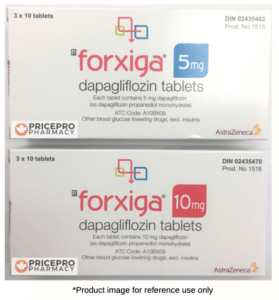
Farxiga 5mg and 10mg from Canada by AstraZeneca


To find low Farxiga cost, click on "CHECK PRICES" above to view the prices and quantities available to order. Also for extra savings, enter Farxiga coupon code FAR10 to get $10 savings on your order. You just need to enter that coupon code at the checkout screen after you select your dosage and quantity of medication you would like to order.

We also offer many other Rx coupons to get more savings on your prescription costs.

What is Farxiga and How to Buy Farxiga Online?

The active medicinal ingredient in is Dapagliflozin propanediol monohydrate, manufactured by AstraZeneca.

Farxiga is also known under the trade name Forxiga in Canada and in other parts of the world.

The dosages available are: Farxiga 5mg and Farxiga 10mg. The 5mg tablet is a yellow color tablet imprinted with "5" on one side and "1427" on the other side.

The 10mg tablet is a yellow color tablet imprinted with "10" on one side and "1428" on the other side of the tablet. The available pack sizes are either 28 or 30 tablets per box, with a typical 3-month supply being either 84 or 90 tablets.

Estimated shipping time as a product of India or Turkey would be 10-18 business days to USA. Compared to a product of Canada or UK would take 7-10 business days in transit time via USPS.

Find more details on dose, adverse effects, and interactions below, by clicking on the expandable blue boxes.

Be sure to apply Farxiga coupon FAR10 at checkout for additional savings. Pay less at PricePro Pharmacy.

discount prescription drugs online

Farxiga Dosage

The following Farxiga doses are available to order:

  • Farxiga 5mg
  • Farxiga 10mg

The manufacturer is AstraZeneca and they are available in pack sizes of 28 or 30 tablets depending on the source selected. The active ingredient is called Dapaglifozin.

Farxiga is also marketed under the name Forxiga in select countries.

prescription drug prices

Farxiga Cost

The low cost of Farxiga at PricePro Pharmacy is:

  • $85.00 for 28 10mg tablets
  • As low as $2.68 per tablet

To further save on Farxiga price it is more cost effective to order a 3-month supply of medication than 1-month supply.

The prices above are without insurance or any patient assistance program.

Rx coupons

Farxiga Coupon

Apply Farxiga coupon code FAR10 for $10 instant discount. 

This coupon for Farxiga can be redeemed for any dosage. Be sure to check our other Rx coupons for bonus savings.

Lower cost generic drug alternative

Farxiga Generic

We do offer a generic for Farxiga known as Dapagliflozin in the following dosage:

  • Dapagliflozin 5mg
  • Dapagliflozin 10mg

They are available in a pack size of 100 tablets and manufactured by MSN Lab.

Generic drugs are typically 40-60% cheaper than the brand version.

prescription delivery across USA

Shipping Times

The estimated shipping times depend on the medication ordered:

  • Product of Canada or UK - 7 to 12 business days
  • Product of Turkey or India - 10 to 18 business days

There is a standard shipping charge of $9.95 applied to each order.

Once you medication ships you will receive an email alert with the applicable tracking information.

online prescription refill

Farxiga Prescription Refill

We offer a free refill reminder service that will kindly remind you by phone or email on the optimal time to place your re-order based on your prescription history and estimated shipping times.

Your prescription can also be refilled by signing into your online pharmacy account or by calling 1-855-776-0079.

Farxiga (Dapagliflozin) Medication Information

Uses

Farxiga is a medication prescribed for people with type 2 diabetes mellitus. It should not be used in those with type 1 diabetes. The generic name is dapagliflozin.

People with type 2 diabetes have resistance to the effects of insulin, a hormone naturally produced in the pancreas. Insulin is a chemical signal that moves glucose from the blood into the cells of the body. With insulin resistance, people with type 2 diabetes have abnormally high levels of glucose in their bloodstream.

Over time, high glucose levels damage small blood vessels of the eyes, kidneys, and feet.

Farxiga causes the kidneys to excrete more glucose than normal, which results in a reduction of blood sugar.  

Dosage

The starting dose of Farxiga is 5 mg by mouth once daily. After four to twelve weeks, the dose can be increased to 10 mg by mouth once daily.

Side Effects

Common side effects of Farxiga may include:

  • Back pain
  • Female genital mycotic infections
  • Increased urination
  • Nasopharyngitis
  • Nausea
  • Urinary tract infections

Precautions

Dapagliflozin does not have a benefit for people with type 1 diabetes mellitus.

Farxiga can cause symptoms of ketoacidosis, even at normal blood sugar levels. Your doctor should monitor for signs and symptoms of ketoacidosis and discontinue immediately if suspected.

Farxiga can lower blood pressure in people with an abnormal volume status. Use caution if you have renal impairment, low blood pressure, or are taking diuretics.

Farxiga cannot be used by people with severe impairment of the kidneys.

Use caution if you have a history of recurrent urinary tract infection (UTI)

Interactions

Farxiga has possible drug-drug interactions with the following medications:

  • Insulin
  • Monoamine oxidase inhibitors
  • Oral antidiabetic medications
  • Quinolones
  • Salicylates
  • Selective serotonin reuptake inhibitors (SSRIs)

Farxiga is often used in combination with other antidiabetic medications. Tell your doctor or pharmacist if you are starting any new medications.

Storage

Store Farxiga at room temperature from 20°C to 25°C (68°F to 77°F).

Pharmacist Tips

  • Farxiga can be taken with or without food and should be taken at the same time every day.
  • Under certain kinds of stress like fever, trauma, infection, or surgery, you may need to stop taking Dapagliflozin for a short time to reduce the risk of euglycemic ketoacidosis.
  • It is important to maintain a healthy lifestyle with proper diet and exercise while taking Farxiga and other anti-diabetic medications. 

Farxiga FAQs

What lab tests will I need to do while taking Farxiga?

Your doctor will most likely have you measure your hemoglobin A1C and a comprehensive metabolic panel (CMP). Hemoglobin A1C is a measure of your blood sugar over time, and CMP is a measure of your kidney and liver function.


How long do I need to take Farxiga?

Type 2 diabetes mellitus is a chronic condition, and anti-diabetic medications may need to be taken lifelong.


What should I do if I miss a dose of Farxiga?

Take it as soon as you remember, unless it is almost time for your next dose. Do not double up to make up for the mixed dose.

Related Products

References

  1. Farxiga [package insert]. Wilmington, DE: AstraZeneca; 2014.

Medication Review by a Clinical Pharmacist - PharmD

Author: Dr. Conor Sheehy, PharmD, BCPS

Dr. Sheehy is a board-certified pharmacotherapy specialist. He has worked in multiple practice settings, including retail and hospital pharmacies, and in medical clinics.  He specializes in anticoagulation, psychiatric medications, and diabetes medications. He strives to empower his patients to understand their medications and improve their overall medical care.

View Linkedin profile

Famvir (Famciclovir)

Author , posted on July 5, 2017

Category:


Famvir

Famciclovir

Select Quantity:
Select Quantity:
Select Quantity:

Famvir

Famciclovir

Select Quantity:
Select Quantity:
Select Quantity:

Famciclovir (Generic)

Famciclovir

Select Quantity:

Famciclovir (Generic)

Famciclovir

Select Quantity:

Famciclovir (Generic)

Famciclovir

Select Quantity:
Select Quantity:
Select Quantity:

Famvir (Famciclovir) Dosage and Side Effects

FAMVIR is used to treat herpes zoster (shingles). FAMVIR is used to treat or prevent recurrence of the viral infections which cause genital herpes.

Proper Use of this medication

How do I use FAMVIR?

You should take FAMVIR only as directed by your doctor. Do not take more of it, do not take it more often and do not take it for a longer period of time than your doctor ordered.

Be sure to take FAMVIR regularly as prescribed. Try to take your tablets at the same time each day. You should continue to take your medicine even if you do not feel better, as it may take a few days for your medicine to work.

If your kidneys are not working very well, your doctor will probably have you take this medicine less often, check with your doctor if you have kidney problems.

FAMVIR will work whether or not you take it with food. You should swallow the tablets whole, with water. Do not chew them.

How long do I use FAMVIR?

The usual adult dose is one FAMVIR tablet three times a day for shingles. Follow your doctor's instructions about how and when to take your tablets. Start taking them as soon as you can for the best effect.

Most people take one tablet when they get up in the morning, one in the middle of the afternoon and one before going to bed at night.

Finish all the tablets you have been given even if you start to feel better. The treatment lasts for seven days.

Treating an outbreak of recurrent genital herpes:

If you have had herpes infections of the genitals before (called recurrent genital herpes), your doctor may decide to treat the outbreak. You will likely be told to take 125 mg twice a day for 5 days or if you are HIV-positive, 500 mg twice a day for 7 days. Most people with recurrent genital herpes take one tablet when waking, and one tablet just before going to bed. FAMVIR should be taken as soon as possible after the early symptoms (pain, burning, blisters, itching, tingling) begin to appear.

Preventing outbreaks of recurrent genital herpes:

If you have had herpes infections of the genitals before (called recurrent genital herpes), then your doctor may decide to prevent future outbreaks. Your doctor will likely tell you that you should continually take 250 mg twice a day. Most people with recurrent genital herpes take one tablet when waking, and one tablet just before going to bed.

Overdose:

Warning:

In case of drug overdose, contact a healthcare practitioner (doctor), hospital emergency department or regional poison control centre, even if there are no symptoms, Bring your pack of tablets with you.

Taking too much of any type of medicine is risky.

Taking too much FAMVIR may affect the kidneys. In people who already have kidney problems it may, rarely, lead to kidney failure if their dose is not correctly lowered.

Important: Your doctor may give you different instructions better suited to your specific needs. If you need more information on how to take FAMVIR properly, double-check with your doctor or pharmacist.

Missed dose:

If you miss taking a FAMVIR tablet, don't worry. Take it as soon as you remember. Take your next tablet at the normal time. However, do not take two doses within a time interval of less than 1 hour, in that case you should skip the missed dose. Carry on as normal until you have finished all the tablets. It is important that you finish all the tablets you have been given, unless your doctor tells you to stop taking them. Do not double-dose.

Side Effects

Any medicine can cause side effects. With FAMVIR, some people may feel sick or get a headache, or experience confusion or dizziness. Other side effects include drowsiness (usually in older people), hallucinations (seeing or hearing things that are not really there), vomiting, yellowing of the skin and/or eyes, abnormal liver function test results, palpitations (signs of abnormal heart beat), skin rash, itching or blistering, diarrhea, tiredness and abdominal pain. If you get these or any other problems while you are taking FAMVIR, tell your doctor or pharmacist.

Warnings and Precautions

Before you take FAMVIR, talk to your doctor if:

  • You have an intolerance to some sugars, galactose intolrance, a severe lactase deficiency or glucose-galactose malabsorption, then you should not take FAMVIR, as this product contains latose
  • You have an allergy (including itching) or other unwanted (side) effects when previously taking FAMVIR
  • You are pregnant, planning to become pregnant or breastfeeding when using FAMVIR
  • You have a past history or current kidney disease
  • You have severe liver problems
  • You have other medical conditions

It is important to tell your doctor, dentist or pharmacist if you are taking other medication, as combining drugs can sometimes result in a change from the expected drug effects, or cause harmful effects.

Interactions with this medication

Always tell your doctor about other medical conditions you have or any medicines you are taking. This means medicines you bought for yourself as well as medicines on prescription. Your doctor or pharmacist will know if it is safe to take FAMVIR as well.

It is particularly important that you tell your doctor or pharmacist if you are taking any of the following medicines:

  • Probenecid (used to treat high blood levels of uric acid associated with gout and to increase blood levels of penicillin-type antibiotics), or any other medicine that can affect your kidneys.

  • Raloxifene (used to prevent and treat osteoporosis).

You can take FAMVIR with or without food.

Other related products

Renvela (Sevelamer)

Author , posted on July 5, 2017

Category:


Renvela

Sevelamer Carbonate

Select Quantity:

Sevelamer Carbonate (Generic)

Sevelamer Carbonate

Select Quantity:

Sevelamer Carbonate (Generic)

Sevelamer Carbonate

Select Quantity:

Renvela (Sevelamer Carbonate) Dosage and Side Effects

RENVELA is used for control of high phosphorus levels in patients with end-stage kidney disease undergoing dialysis (whether hemodialysis or peritoneal dialysis).

Proper Use of this medication

Usual starting dose:

Dosage is individualized. Your doctor will determine your dosage.

RENVELA should be taken immediately prior to or with meals.

The total daily dose should be divided according to meal portions during the day.

Average maintenance dose is approximately 7-8 tablets of 800 mg each day. Always follow your physician’s dosage instructions.

Overdose:

In case of an overdose, contact your doctor or regional poison control center immediately.

Missed dose:

If a dose is forgotten, it should be skipped. Double dosing is not advisable.

Side Effects

Although RENVELA is generally well tolerated, some patients may experience side effects, including: nausea, vomiting, diarrhea, indigestion, constipation, abdominal pain, rash, itch, and flatulence (gas). Tell your doctor if you have new onset or worsening of constipation.

Warnings and Precautions

Serious Warnings and Precautions

Renvela may cause serious side effects that may require hospitalization and surgery. Tell your doctor or go to the hospital right away if you have difficulty swallowing, bowel obstruction, or bowel perforation.

RENVELA tablets should be swallowed whole and should not be crushed, chewed, or broken into pieces.

BEFORE you use RENVELA talk to your doctor or pharmacist if you:

  • have difficulty swallowing (swallowing disorders or problems with your esophagus).
  • have an intestinal disorder such as, conditions that slow down the passage of food through the intestine and lead to blockage.
  • have had surgery on your intestines.
  • have severe or worsening constipation.
  • have low phosphorus levels in your blood.
  • have low calcium levels in your blood.
  • are pregnant, plan to become pregnant or are nursing.
  • have any allergies to this drug or its ingredients or components of the container.

Interactions with this medication

RENVELA may affect the way other medicines work. Please tell your doctor or pharmacist what medicine you have recently taken, are taking or intend to take including those available without prescription and herbal remedies. These medicines may need to be taken one hour before or three hours after RENVELA. Remember, RENVELAmust always be taken with food.

If you see another doctor or a dentist while you are using RENVELA, you should tell them that you are using RENVELA.

Drugs that may interact with RENVELA include: ciprofloxacin and levothyroxine. Your doctor may order blood tests to more closely monitor the thyroid hormones in your blood if you are taking levothyroxine and RENVELA.

RENVELA may also interact with drugs that are used to prevent the rejection of a transplanted organ, such as cyclosporin, mycophenolate and tacrolimus.

Other related products

Pepcid (Famotidine)

Author , posted on July 5, 2017

Category:


Pepcid AC

Famotidine

Select Quantity:

Pepcid AC Max

Famotidine

Select Quantity:

Famotidine (Generic)

Famotidine

Select Quantity:
Select Quantity:

Famotidine (Generic)

Famotidine

Select Quantity:
Select Quantity:

Pepcid (Famotidine) Dosage and Side Effects

Prescription PEPCID is used to treat conditions such as ulcers (sores in the stomach lining or small intestine), gastroesophageal reflux disease or GERD (when stomach acid irritates the esophagus, causing heartburn and other problems), and certain tumors in the pancreas or the small intestine (Zollinger-Ellison syndrome).

Although PEPCID is not approved for veterinary use, veterinarians do commonly give the medication to dog and cats to suppress stomach acid if they are producing too much.

Proper Use of this medication

Prescription PEPCID comes as a tablet (20 mg or 40 mg) or a liquid to take orally. OTC famotidine is available as a tablet, chewable tablet, or capsule.

Doses of prescription PEPCID depend on the condition being treated. Here are recommended doses for some of its more common uses:

  • For duodenal ulcer, the usual dose is 40 mg daily at bedtime or 20 mg twice a day for 6 to 8 weeks, followed by a maintenance dose of about 20 mg at bedtime.
  • For benign gastric ulcer the usual dose is 40 mg daily at bedtime.
  • For GERD, the usual dose is 20 mg twice daily for up to 6 weeks. If you have esophagitis (inflammation of the esophagus), the dose is usually 20 or 40 mg twice daily for up to 12 weeks.
  • For children under a year of age who have GERD, the usual starting dose is 0.5 mg for every kilogram (2.2 pounds) of body weight of oral PEPCID for up to 8 weeks. It's given once daily to those under three months and twice daily to those older than 3 months but less than one year.
  • For children with peptic ulcers who are age 1 to 16 years, the dose is usually 0.5mg per kg of body weight at bedtime or twice a day up to 40 mg daily.
  • For children ages 1 to 16 years with GERD, the dose is 1 mg per kg of weight a day, or divided twice a day up to 40 mg.

PEPCID Overdose

Do not take more prescription PEPCID than recommended. Oral doses of up to 640 mg a day have reportedly been given to adults with conditions involving excess stomach acid with no serious problems. However, you should stick with the doses your doctor recommends.

Do not take more than two tablets of OTC famotidine in a 24-hour period and don't take it for longer than 2 weeks unless your doctor recommends it. If you use OTC famotidine for 2 weeks and still have symptoms of heartburn or indigestion, stop the drug and call your doctor.

Missed Dose of PEPCID

If you forget a dose, take it as soon as you remember, unless it is nearly time for the next dose. If it's almost time for the next one, skip the missed dose and resume your normal medication schedule. Do not double up.

Side Effects

Side effects most often reported by PEPCID users are:

  • Headache
  • Dizziness
  • Constipation
  • Diarrhea

Reports show that these side effects were infrequent, however. In one clinical trial, less than 5 percent of people had headache, and less than 2 percent had dizziness, constipation, or diarrhea from taking PEPCID.

Severe Side Effects of PEPCID

Severe side effects are also rare. Those that have been reported are heart rhythm problems, jaundice, liver enzyme abnormalities, facial swelling, and grand mal seizure.

Warnings and Precautions

If you have kidney problems, your doctor may not prescribe or recommend PEPCID. Studies show that PEPCID can have adverse effects on the central nervous system in people who have moderate to severe kidney problems.

Pregnancy and PEPCID

PEPCID is in Pregnancy category B, according to the FDA, which means that animal studies have not found a risk to the developing fetus, but there are no adequate studies of the drug in pregnant women.

Ask your doctor if you can take PEPCID if you are pregnant.

Studies have found that PEPCID is secreted into breast milk. If you are breastfeeding, you should discuss whether to discontinue nursing or stop taking the drug with your doctor.

Interactions with this medication

Among the drugs that PEPCID may interact with are:

  • Atazanavir (Reyataz), an HIV/AIDS drug
  • Tizanidine (Zanaflex), a muscle relaxant
  • Naproxen (Aleve) and other pain relievers

You should always tell your doctor about any prescription, non-prescription, over-the-counter (OTC), illegal and recreational drugs, herbal remedies, nutritional and dietary supplements, and all other drugs and treatments you're taking.

PEPCID and Alcohol

Avoid drinking alcohol while taking PEPCID, as it may be damaging to your stomach.

Other related products

Zofran (Ondansetron)

Author , posted on July 5, 2017

Category:


Zofran

Ondansetron

Select Quantity:

Zofran

Ondansetron

Select Quantity:
Select Quantity:

Ondansetron (Generic)

Ondansetron

Select Quantity:
Select Quantity:

Ondansetron (Generic)

Ondansetron

Select Quantity:
Select Quantity:

Zofran (Ondansetron) Dosage and Side Effects

Doctors sometimes prescribe Zofran to treat nausea and vomiting caused by cancer treatments such as chemotherapy and radiation therapy.  Zofran also can treat nausea and vomiting after surgery.  The drug may also help prevent the common complication of shivering in people who have had anesthesia.

Proper Use of this medication

The label on the container of your medicine should tell you how often to take your medicine and how many doses you should take each time. If not, or if you are not sure, consult your doctor or pharmacist.

Do not take more doses, or take them more often than your doctor prescribes. If, however, you vomit within one hour of taking your medicine, you should take the same amount of medicine again. If vomiting persists, consult your doctor.

For ZOFRAN ODT orally disintegrating tablets:

Do not try to push ZOFRAN ODT through the lidding foil.

Tear along the perforations of the foil to separate off one tablet within its blister unit.

Peel back the foil at the place indicated by the arrow.

Gently push the ZOFRAN ODT out of the blister pocket, and remove it with dry fingers.

Place the ZOFRAN ODT on top of the tongue. It will dissolve very quickly.

Swallow as normal.

Usual dose:

Chemotherapy Induced Nausea and Vomiting:

Based on how likely you are to experience nausea and/or vomiting, caused by your cancer treatment, your doctor will tell you the amount you need to take and how frequently.

Adult: You may receive ZOFRAN before and/or after chemotherapy. The dose of ZOFRAN is between 8 and 24 mg a day (taken orally) for up to 5 days depending on the potential of your chemotherapy treatment to cause you to vomit and/or have nausea.

Children (4 to 12 years): After chemotherapy, take 4 mg orally every 8 hours for up to 5 days.

Radiotherapy Induced Nausea and Vomiting:

Adult: Take 8 mg orally 1 to 2 hours before radiotherapy. After therapy, take 8 mg orally every 8 hours for up to 5 days after a course of treatment.

Prevention of Post-Operative Nausea and Vomiting:

Adult: Take 16 mg orally one hour before anaesthesia.

If you have a liver problem, your dose may be altered. Please follow the instructions of your doctor.

Overdose:

In case of drug overdose, contact a health care practitioner, hospital emergency department or regional Poison Control Centre immediately, even if there are no symptoms.

Missed dose:

If you miss a dose and do not feel sick, take the next dose when it is due.

If you forget to take your medicine and feel sick or vomit, take a dose as soon as possible.

If your doctor decides to stop the treatment, do not keep any left over medicine unless your doctor tells you to.

Side Effects

You may experience headaches, a feeling of warmness, flushing or constipation, while taking ZOFRAN. Although uncommon, low blood pressure and hiccups have also been reported.

There is no need to stop taking your medicine, but you should tell your doctor about these symptoms at your next visit.

If your nausea (feeling of sickness) or vomiting do not improve while taking ZOFRAN, consult your doctor for further advice.

If you feel unwell or have any symptoms that you do not understand, you should contact your doctor immediately.

Warnings and Precautions

BEFORE you use ZOFRAN or ZOFRAN ODT talk to your doctor or pharmacist if:

  • you have a history of hypersensitivity (an allergic reaction) to any ingredient in ZOFRAN or ZOFRAN ODT.

  • if you have had an allergic reaction to medicines similar to ZOFRAN or ZOFRAN ODT such as medicines containing granisetron or palonosetron.

  • you are pregnant or likely to become pregnant.

  • you are breast feeding.

  • you have liver problems.

  • you have signs of intestinal obstruction.

  • you have a history of heart problems.

  • you have a condition called phenylketonuria and were prescribed ZOFRAN ODT, because it contains aspartame.

If you experience wheezing and tightness of the chest, heart throbbing, swelling of eyelids, face or lips, or develop a skin rash, skin lumps or hives, contact your doctor immediately. Do not take anymore medicine unless your doctor tells you to do so.

Serotonin Syndrome is a rare but potentially life-threatening reaction that may occur if you take ZOFRAN or ZOFRAN ODT with certain other medications. It may cause serious changes in how your brain, muscles and digestive system work. Be sure to tell your healthcare professional all the medicines you are taking.

Interactions with this medication

As with most medicines, interactions with other drugs are possible. To avoid potentially life-threatening reactions tell your healthcare professional about ALL the medications you take, including those prescribed by other doctors, vitamins, minerals, natural supplements or alternative medicines. It is important that your doctor know about all your medication so that you get the best possible treatment. Tell your doctor if you are taking carbamazepine, phenytoin, or rifampicin. If you are taking any medicines containing tramadol, ZOFRAN may decrease its effectiveness.

Also, make sure you tell your doctor or pharmacist if you are taking:

  • Drugs used to treat heart rhythm disorders

  • Other drugs that may disturb heart rhythm

  • Antipsychotics

  • Antidepressants

  • Antibiotics or antifungals

  • Opioid analgesics (painkillers)

  • Other drugs to treat nausea and vomiting

  • Asthma drugs

  • Cancer drugs

  • Diuretics

  • Other drugs that affect serotonin including SSRIs, SNRIs§, triptans, MAOIs (including the antibiotic linezolid and methylene blue), drugs that contain tryptophan, or St. John’s Wort.

Other related products