

Optimmune Ointment (Cyclosporine)

Author , posted on July 4, 2017

Category:


Optimmune Eye Ointment

Cyclosporine (Ciclosporin)

Select Quantity:

Cyclosporine Ointment (Generic)

Cyclosporine (Ciclosporin)

Select Quantity:

Optimmune Ointment (Cyclosporine) Dosage and Side Effects

Cyclosporine ophthalmic (Optimmune) is indicated for the treatment of keratonconjnctivitis sicca (KCS) and chronic superficial keratitis in dogs. KCS (aka dry eye syndrome) is usually a lifetime required treatment.

Proper Use of this medication

Cyclosporine Ophthalmic should be used according to your veterinarian’s instructions. Prior to applying the ointment, if a discharge is present, clean with a sterile eyewash solution recommended by your veterinarian.

Please note that the ointment may temporarily blur your dog’s vision; please watch your pet to avoid any injury from bumping into objects.

Side Effects

Side effects from Cyclosporine Ophthalmic are rare due to the low dose concentration of cyclosporine. Most common side effects of Cyclosporine Ophthalmic include:

  • Eye irritation (redness, rubbing at the eye, excessive blinking)

Please contact your veterinarian if the side effects persist or worsen within a week of treatment.

Warnings and Precautions

Do not use in dogs that are allergic to Cyclosporine. Do not use in dogs that have either a viral or fungal eye infection.

The safe use of cyclosporine ophthalmic (Optimmune) has not been determined in puppies, breeding, pregnant, or lactating dogs.

Interactions with this medication

When using Cyclosporine Ophthalmic, please inform your veterinarian of any other medications your pet is currently taking, including supplements, as interaction could occur.

If applying other eye medications please wait at least five minutes before applying cyclosporine ophthalmic (Optimmune).

Other related products

Epivir (Lamivudine)

Author , posted on July 4, 2017

Category:


Epivir

Lamivudine

Select Quantity:

Epivir

Lamivudine

Select Quantity:

Zeffix

Lamivudine

Select Quantity:

Heptovir

Lamivudine

Select Quantity:

Lamivudine (Generic)

Lamivudine

Select Quantity:

Lamivudine-HBV (Generic)

Lamivudine

Select Quantity:

Lamivudine (Generic)

Lamivudine

Select Quantity:
Select Quantity:

Lamivudine (Generic)

Lamivudine

Select Quantity:

Lamivudine HBV (Generic)

Lamivudine

Select Quantity:

Epivir (Lamivudine) Dosage and Side Effects

EPIVIR is an antiviral medicine that prevents human immunodeficiency virus (HIV) or hepatitis B virus cells from multiplying in your body.

Proper Use of this medication

Follow all directions on your prescription label. Do not take this medicine in larger or smaller amounts or for longer than recommended. You should not take Epivir (for treating HIV) together with Epivir-HBV (for treating hepatitis B).

EPIVIR can be taken with or without food.

You may need to break an Epivir tablet in half when giving this medicine to a child for HIV. Call your doctor if the child has any trouble swallowing the tablet.

If a child is using this medicine, tell your doctor if the child has any changes in weight. EPIVIR doses are based on weight in children, and any changes may affect your child's dose.

Measure liquid medicine with the dosing syringe provided, or with a special dose-measuring spoon or medicine cup. If you do not have a dose-measuring device, ask your pharmacist for one.

The Epivir brand contains a higher dose of EPIVIR than Epivir-HBV brand. Epivir is for treating HIV and Epivir-HBV is for treating hepatitis B. Each time you get a refill of this medication, be sure you have received the correct brand to treat your condition.

While using EPIVIR, you may need frequent blood tests. Your kidney and liver function may also need to be checked.

HIV/AIDS is usually treated with a combination of drugs. Use all medications as directed by your doctor. Read the medication guide or patient instructions provided with each medication. Do not change your doses or medication schedule without your doctor's advice. Every person with HIV or AIDS should remain under the care of a doctor.

Store at room temperature away from moisture and heat. Do not allow the liquid form of this medicine to freeze. Keep the bottle tightly closed when not in use.

If you have hepatitis B you may develop liver symptoms after you stop taking EPIVIR. Your doctor may want to check your liver function for several months after you stop using this medicine.

Seek emergency medical attention or call the Poison Help line.

Take the missed dose as soon as you remember. Skip the missed dose if it is almost time for your next scheduled dose. Do not take extra medicine to make up the missed dose.

Side Effects

Get emergency medical help if you have signs of an allergic reaction: hives; difficult breathing; swelling of your face, lips, tongue, or throat.

Some people develop lactic acidosis while taking EPIVIR. Early symptoms may get worse over time and this condition can be fatal. Get emergency medical help if you have even mild symptoms such as:

  • muscle pain or weakness;
  • numb or cold feeling in your arms and legs;
  • trouble breathing;
  • feeling dizzy, light-headed, tired, or very weak;
  • stomach pain, nausea with vomiting; or
  • fast or uneven heart rate.

Call your doctor at once if you have:

  • pancreas problems--severe pain in your upper stomach spreading to your back, nausea and vomiting, fast heart rate; or
  • liver problems--nausea, upper stomach pain, itching, tired feeling, loss of appetite, dark urine, clay-colored stools, jaundice (yellowing of the skin or eyes);

Common side effects may include:

  • diarrhea;
  • cold symptoms such as stuffy nose, sneezing, sore throat; or
  • abnormal liver function tests.

Warnings and Precautions

This medicine may cause a serious condition called lactic acidosis. Get emergency medical help if you have even mild symptoms such as: muscle pain or weakness, numb or cold feeling in your arms and legs, trouble breathing, stomach pain, nausea with vomiting, fast or uneven heart rate, dizziness, or feeling very weak or tired.

EPIVIR can also cause severe or life-threatening effects on your liver or pancreas. Call your doctor at once if you have: severe pain in your upper stomach spreading to your back, nausea and vomiting, fast heart rate, itching, loss of appetite, dark urine, clay-colored stools, or jaundice (yellowing of the skin or eyes).

The Epivir brand of EPIVIR (for treating HIV) should not be taken together with any other medicine that contains EPIVIR or emtricitabine. This includes Atripla, Combivir, Complera, Emtriva, Epzicom, Stribild, Trizivir, and Truvada.

The Epivir-HBV brand of EPIVIR (for treating hepatitis B) should not be taken together with any other medicine that contains EPIVIR, which includes Combivir, Epivir, Epzicom, and Trizivir.

If you have hepatitis B you may develop liver symptoms after you stop taking EPIVIR, even months after stopping. Your doctor may want to check your liver function for several months after you stop using EPIVIR. Visit your doctor regularly.

You should not take EPIVIR if you are allergic to it.

The Epivir brand of EPIVIR (for treating HIV) should not be taken together with any other medicine that contains EPIVIR or emtricitabine. This includes:

  • Atripla (efavirenz, emtricitabine, and tenofovir);
  • Combivir (EPIVIR and zidovudine);
  • Complera (rilpivirine, emtricitabine, and tenofovir);
  • Emtriva (emtricitabine);
  • Epzicom (abacavir and EPIVIR);
  • Stribild (cobicistat, elvitegravir, emtricitabine, and tenofovir);
  • Trizivir (abacavir, EPIVIR, and zidovudine); and
  • Truvada (emtricitabine and tenofovir).

The Epivir-HBV brand of EPIVIR (for treating hepatitis B) should not be taken together with any other medicine that contains EPIVIR, which includes:

  • Combivir (EPIVIR and zidovudine);
  • Epivir (EPIVIR) for treating HIV;
  • Epzicom (abacavir and EPIVIR); and
  • Trizivir (abacavir, EPIVIR, and zidovudine).

To make sure EPIVIR is safe for you, tell your doctor if you have:

  • liver disease (especially hepatitis B if you are being treated for HIV), or if you had a liver transplant;
  • kidney disease;
  • a history of pancreatitis; or
  • if you have used a medicine similar to EPIVIR in the past, such as abacavir (Ziagen), didanosine (Videx), emtricitabine (Atripla, Complera, Emtriva, Stribild, Truvada), stavudine (Zerit), tenofovir (Viread), zalcitabine (Hivid), or zidovudine (Retrovir).

Some people taking EPIVIR develop a serious condition called lactic acidosis. This may be more likely in women, in people who are overweight or have liver disease, and in people who have taken HIV/AIDS medication for a long time. Talk with your doctor about your risk.

It is not known whether EPIVIR will harm an unborn baby. HIV can be passed to your baby if you are not properly treated during pregnancy. Tell your doctor if you are pregnant or plan to become pregnant. Take all of your HIV medicines as directed to control your infection.

If you are pregnant, your name may be listed on a pregnancy registry. This is to track the outcome of the pregnancy and to evaluate any effects of EPIVIR on the baby.

EPIVIR can pass into breast milk and may harm a nursing baby. You should not breast-feed while you are using EPIVIR to treat hepatitis B. Women with HIV or AIDS should not breast feed a baby. Even if your baby is born without HIV, the virus may be passed to the baby in your breast milk.

EPIVIR should not be given to a child younger than 2 years old.

If you have diabetes, you should know that the liquid forms of EPIVIR contain 3 to 4 grams of sucrose (sugar) per dose.

Interactions with this medication

Taking this medicine will not prevent you from passing HIV to other people. Do not have unprotected sex or share razors or toothbrushes. Talk with your doctor about safe ways to prevent HIV transmission during sex. Sharing drug or medicine needles is never safe, even for a healthy person.

Other drugs may interact with EPIVIR, including prescription and over-the-counter medicines, vitamins, and herbal products. Some drugs should not be used together with EPIVIR. Tell each of your health care providers about all medicines you use now and any medicine you start or stop using.

Other related products

EpiPen (Epinephrine)

Author , posted on July 4, 2017

Category:


EpiPen Auto-Injector

Epinephrine

Select Quantity:

EpiPen Junior Auto Injector

Epinephrine

Select Quantity:

EpiPen Auto-Injector

Epinephrine

Select Quantity:

EpiPen Junior Auto Injector

Epinephrine

Select Quantity:

Epipen Coupon

EpiPen Coupon Code

Bonus Offer for $10 Discount with Epipen Coupon Code EPI10

Epipen costs about $600 for two pens at your local pharmacy.

Our Canadian pharmacy price starts at $145 for 1 pen and $290 for 2 pens.

Did we mention with Epipen coupon code EPI10 you can get an additional savings.

*Coupon codes cannot be combined and are for one-time use only

Epipen (Epinephrine) Medication Information

Uses

Epipen is an auto injector used to emergently treat allergic reactions. 

Dosage

The pen is available in 1:2000 strength.

Side Effects

The most common side effects of Epipen include:

  • Moderate anxiety
  • Restlessness
  • Tremor
  • Dizziness
  • Sweating
  • Nausea
  • Vomiting
  • Headache 

Speak with your doctor for a full list of side effects that apply to you if you are taking Epipen.

Precautions

If patients use an Epipen, they should seek emergency care. 

Epipens should be used cautiously in patients who have heart arrythmias. 

Interactions

Common drug interactions with Epipen include:

  • TCAs
  • MAOIs
  • Levothyroxine
  • Antihistamine
  • Chlorpheniramine
  • Diphenhydramine 

Speak with your doctor for more information and before starting a new medication with Epipen. 

Storage

Do at room temperature (77 ºF). Protect from light. 

Pharmacist Tips

  • The Epipen will deliver 0.3 mg or epinephrine. 
  • The auto injector Epipen will dispense one dose of epinephrine.
  • Patients should periodically inspect their Epipen for discoloration or particles. 

Epinephrine FAQs

What should you do after using an Epipen?

After administering the Epipen, seek immediate medical attention. 


Can you use Epipen through clothing?

You can administer Epipen through clothing if you need to. 


How many times can you use an Epipen?

There is only one dose in an Epipen


How long do you hold the Epipen in place?

Hold the Epipen in place for 10 seconds.


Where do you inject the Epipen?

The Epipen should be injected on the outside of the thigh. 


Related Drugs

Reference:

Epipen {package insert}. Columbia, MD: Meridian Medical Technologoes, Inc.; 2008.

https://www.accessdata.fda.gov/drugsatfda_docs/label/2008/019430s044lbl.pdf

PharmD Medical Writer

Author: Dr. Larisa Roybal, PharmD

Dr. Roybal is a board-certified pharmacotherapy specialist who has practiced in both ambulatory and acute care settings. Her pharmacy interests include oncology and general inpatient pharmacy.

Epclusa (Sofosbuvir/Velpatasvir)

Author , posted on July 4, 2017

Category:


Epclusa

Sofosbuvir, Velpatasvir

Select Quantity:

Epclusa (Sofosbuvir/Velpatasvir) Dosage and Side Effects

EPCLUSA treats chronic (lasting longer than 6 months) hepatitis C infection in adults.

Proper Use of this medication

  • Take this medicine with or without food.
  • This medicine is taken for 12 weeks.
  • If you are taking an antacid, you may need to take EPCLUSA at a different time than the antacid. Talk to your doctor or pharmacist.
  • Do NOT stop taking EPCLUSA without first talking with your doctor.

Usual adult dose:

  • Take one tablet once each day.

Overdose:

If you think you have taken too much EPCLUSA, contact your healthcare professional, hospital emergency department or regional Poison Control Centre immediately, even if there are no symptoms.

Missed dose:

It is important to take EPCLUSA each day.

  • If you miss a dose of EPCLUSA and you notice within 18 hours, take a tablet as soon as you can. Then take the next dose at your usual time.
  • If you miss a dose of EPCLUSA and you notice after 18 hours, wait and take the next dose at your usual time. Do NOT take a double dose (two doses close together).

What to do if you vomit (throw up):

  • If you vomit less than 3 hours after taking EPCLUSA, take another tablet.
  • If you vomit more than 3 hours after taking EPCLUSA, wait. Do NOT take another tablet until you are scheduled to take the next tablet.

Side Effects

The most common side effects of EPCLUSA are tiredness and headache.

These are not all the possible side effects you may feel when taking EPCLUSA. If you experience any side effects not listed here, contact your doctor.

If you have a troublesome symptom or side effect that is not listed here or becomes bad enough to interfere with your daily activities, talk to your doctor.

Warnings and Precautions

Talk about any health conditions or problems you may have, including if you:

  • have liver problems other than hepatitis C infection.
  • have had a recent liver transplant.
  • have hepatitis B.
  • have HIV.
  • have severe kidney disease or you are on dialysis.
  • are breastfeeding or plan to breastfeed. Do NOT breastfeed while taking EPCLUSA.
  • are taking anything listed in the section
  • Your doctor may monitor your liver function during EPCLUSA treatment, under some conditions.

Pregnancy:

  • If you are pregnant or plan to become pregnant, ask your doctor for advice before taking this medicine. It is NOT known if EPCLUSA can harm your unborn child.
  • You or your partner must not become pregnant while taking EPCLUSA in combination with ribavirin or become pregnant within 6 months after you have stopped taking ribavirin. Ribavirin may cause birth defects and death of the fetus. Extreme care must be taken to avoid becoming pregnant.
  • Your doctor will order monthly pregnancy test during treatment with EPCLUSA in combination with ribavirin and for 6 months after treatment has stopped.
  • If you or your partner become pregnant while taking EPCLUSA in combination with ribavirin, contact your doctor. Read the package insert for ribavirin for information regarding pregnancy.

Contraception:

  • If you are taking EPCLUSA in combination with ribavirin, then you and your partner must use 2 effective methods of birth control during the entire treatment and for 6 months after you stop taking this combination.

Other warnings you should know about:

Because EPCLUSA already contains sofosbuvir, do not take EPCLUSA with any other medicines containing sofosbuvir (e.g. Sovaldi, Harvoni).

Tell your doctor or pharmacist about all the medicines you take, including any drugs, vitamins, minerals, natural supplements or alternative medicines.

Interactions with this medication

The following may interact with EPCLUSA:

  • amiodarone (Cordarone), a drug used to treat certain abnormal heart rhythms. Amiodarone may slow your heartbeat. Get medical help right away if you get symptoms such as fainting, dizziness, lightheadedness, weakness, shortness of breath.
  • carbamazepine (Tegretol), a drug used to treat seizures, nerve pain, and bipolar disorder.
  • digoxin (Lanoxin, Toloxin), a drug used to treat congestive heart failure and a certain abnormal heart rhythm (atrial fibrillation).
  • efavirenz (Sustiva, Atripla), a drug used to treat HIV.
  • medicines for indigestion, heartburn, or ulcers. Examples are nizatidine (Axid), famotidine (Pepcid AC, Peptic Guard, Ulcidine), cimetidine (Tagamet), ranitidine (Zantac), esomeprazole (Nexium), lansoprazole (Prevacid), omeprazole (Losec), rabeprazole (Aciphex) and pantoprazole (Pantoloc) or antacids (like Tums, Rolaids or Alka-Seltzer) that have an ingredient to protect the stomach.
  • oxcarbazepine (Trileptal), a drug used to control seizures.
  • phenobarbital, a drug used to treat anxiety and to control seizures.
  • phenytoin (Dilantin), a drug used to control seizures.
  • rifabutin (Mycobutin), a drug used to treat tuberculosis.
  • rifampin (Rifadin, Rifater, Rofact), a drug used to treat tuberculosis.
  • rosuvastatin (Crestor), a drug used to treat high cholesterol and to help prevent heart attacks and strokes.
  • St. John’s wort (Hypericum perforatum), an herbal product used for anxiety or depression.
  • tipranavir (Aptivus) or tipranavir/ritonavir (Aptivus and Norvir), drugs used to treat HIV.
  • tenofovir disoproxil fumarate (Atripla, Complera, Stribild, Truvada, Viread), to treat HIV.

Other related products

Endometrin (Progesterone)

Author , posted on July 4, 2017

Category:


Endometrin

Progesterone

Select Quantity:

Endometrin

Progesterone

Select Quantity:

Endometrin (Progesterone) Dosage and Side Effects

ENDOMETRIN is used as a progesterone supplement in women undergoing treatment for in vitro fertilization (IVF).

Proper Use of this medication

Use ENDOMETRIN exactly as prescribed by your doctor.

Usual dose:

One tablet inserted into the vagina 2 to 3 times a day.

How to use ENDOMETRIN:

  1. Unwrap the applicator.
  2. Put one tablet in the space provided at the end of the applicator. The tablet should fit snugly and not fall out.
  3. While you are standing, sitting, or when lying on your back with your knees bent, gently place the thin end of the applicator well into the vagina.
  4. Push the plunger to release the tablet.
  5. Remove the applicator and throw it away in the trash.

Overdose:

Call your doctor if you use too much ENDOMETRIN, or contact poison control centre.

Missed dose:

If you forget a dose of ENDOMETRIN, take the dose as soon as you remember, but do not use more than your daily dose.

Side Effects

Sex steroids may also increase the risk of vision impairment. Talk to your doctor if you are 35 years of age or older, and smoking to prevent complications. ENDOMETRIN should be stopped and contact your doctor immediately if you experience sudden severe headache, impaired vision and stroke.

The sudden discontinuation of ENDOMETRIN may cause increased anxiety, moodiness and increased risk of seizures. If depression worsens ENDOMETRIN should be discontinued.

Common side effects with ENDOMETRIN include: abdominal pain, nausea, swollen ovaries (ovarian hyperstimulation syndrome), abdominal bloating, headache, uterine cramping, vaginal bleeding, vomiting, urinary infections, constipation and tiredness. A side effect associated with IVF includes post procedural pain such as pain post-oocyte retrieval (pelvic pain after surgery).

Less common side effects include vaginal irritation such as genital itching, vaginal burning sensation, vaginal discomfort and discharge, and swelling of the limbs.

Other reported side effects similar to other drugs containing progesterone include breast tenderness, mood swings, irritability and drowsiness.

Warnings and Precautions

Before starting treatment you and your partner should be assessed by a doctor for causes of infertility. Before using ENDOMETRIN, talk to your doctor if you have or have had the following condition:

  • a history of breast disease (e.g., breast lumps) or a family history of breast cancer or genital track cancer
  • high blood pressure
  • heart or kidney disease
  • history of depression
  • migraine headache
  • a history of seizures/epilepsy
  • diabetes
  • a history of blood clots, heart attack or stroke
  • unusual vaginal bleeding without a known reason
  • a history of liver disease or jaundice
  • breast feeding
  • water retention
  • asthma
  • smoking

Interactions with this medication

Tell your doctor or pharmacist if you are taking, or have been taking, any other medicines, even medicines you buy without a prescription, and natural health products. Certain drugs may interact with progesterone. ENDOMETRIN is not recommended for use with other vaginal products (such as those to treat vaginal yeast infection).

Other related products

Neoral Solution (Cyclosporine)

Author , posted on July 4, 2017

Category:


Neoral Solution

Cyclosporine (Ciclosporin)

Select Quantity:

Neoral (Cyclosporine) Usage and Side Effects

CYCLOSPORINE (SYE kloe spor een) is used to decrease the immune system's response to a transplanted organ. The medicine is also used for rheumatoid arthritis and psoriasis.

Proper Use of this medication

Take this medicine by mouth. Follow the directions on the prescription label. Use a specially marked spoon or container to measure each dose. Ask your pharmacist if you do not have one. Household spoons are not accurate. Before taking this medicine dilute your dose with orange or apple juice that is at room temperature. Do not dilute with grapefruit juice or any other liquid. Take your medicine at regular intervals. Do not take your medicine more often than directed. Do not stop taking except on your doctor's advice.

Talk to your pediatrician regarding the use of this medicine in children. While this drug may be prescribed for children as young as 1 year of age for selected conditions, precautions do apply.

Patients over 65 years old may have a stronger reaction and need a smaller dose.

Side Effects

Side effects that you should report to your doctor or health care professional as soon as possible:
-allergic reactions like skin rash, itching or hives, swelling of the face, lips, or tongue
-changes in vision
-high blood pressure
-increased urge to urinate or frequent urination
-numbness or tingling in the hands and feet
-seizures
-severe stomach pain
-vomiting
-yellowing of the eyes or skin

Side effects that usually do not require medical attention (report to your doctor or health care professional if they continue or are bothersome):
-bleeding or tender gums, overgrowth of gum tissue
-diarrhea
-excessive hair growth on the face or body
-nausea
-tremors

Warnings and Precautions

Visit your doctor or health care professional for regular checks on your progress. You will have regular blood checks. Do not change the brand of medicine unless directed by your doctor or health care professional.

If you get a cold or other infection while receiving this medicine, call your doctor or health care professional. Do not treat yourself. The medicine may decrease your body's ability to fight infections.

You may get drowsy or dizzy. Do not drive, use machinery, or do anything that needs mental alertness until you know how this medicine affects you. Do not stand or sit up quickly, especially if you are an older patient. This reduces the risk of dizzy or fainting spells. Alcohol may interfere with the effect of this medicine. Avoid alcoholic drinks.

This medicine can make you more sensitive to the sun. Keep out of the sun. If you cannot avoid being in the sun, wear protective clothing and use sunscreen. Do not use sun lamps or tanning beds/booths.

The medicine can cause unusual growth of gum tissue and can make your gums bleed. Practice good oral hygiene, and be careful when brushing and flossing your teeth. See your dentist regularly.

Some products may contain alcohol. Ask your pharmacist or healthcare provider if this medicine contains alcohol. Be sure to tell all healthcare providers you are taking this medicine. Certain medicines, like metronidazole and disulfiram, can cause an unpleasant reaction when taken with alcohol. The reaction includes flushing, headache, nausea, vomiting, sweating, and increased thirst. The reaction can last from 30 minutes to several hours.

Interactions with this medication

Do not take this medicine with any of the following medications:
-bosentan
-cidofovir
-cisapride
-grapefruit juice
-mibefradil
-ranolazine
-red yeast rice, monascus purpureus
-St. John's wort
-tacrolimus

This medicine may also interact with the following medications:
-acyclovir
-allopurinol
-amiloride
-amiodarone
-bromocriptine
-carbamazepine
-certain antibiotics
-cimetidine
-colchicine
-danazol
-digoxin
-female hormones, including contraceptive or birth control pills
-imatinib
-medicines for fungal infections like amphotericin B, fluconazole, itraconazole, terbinafine, and ketoconazole
-medicines for blood pressure like diltiazem, nicardipine, verapamil, enalapril, ramipril, and losartan
-medicines for cholesterol like lovastatin, simvastatin, atorvastatin, and fenofibrate
-medicines for HIV infection like indinavir, nelfinavir, ritonavir, and saquinavir
-medicines that suppress the immune system
-melphalan
-methotrexate
-metoclopramide
-NSAIDs, medicines for pain and inflammation, like ibuprofen or naproxen
-octreotide
-orlistat
-oxcarbazepine
-phenobarbital
-phenytoin
-ranitidine
-sirolimus
-spironolactone
-steroid medicines like prednisone or cortisone
-sulfinpyrazone
-ticlopidine
-triamterene
-vaccines
-voriconazole

Other related products

Neoral (Cyclosporine)

Author , posted on July 4, 2017

Category:


Atopica

Cyclosporine (Ciclosporin)

Select Quantity:
Select Quantity:
Select Quantity:
Select Quantity:

Neoral

Cyclosporine (Ciclosporin)

Select Quantity:
Select Quantity:
Select Quantity:
Select Quantity:

Cyclosporine (Generic)

Cyclosporine (Ciclosporin)

Select Quantity:
Select Quantity:
Select Quantity:

Cyclosporine (Generic)

Cyclosporine (Ciclosporin)

Select Quantity:
Select Quantity:
Select Quantity:

Neoral (Cyclosporine) Dosage and Side Effects

CYCLOSPORINE (SYE kloe spor een) is used to decrease the immune system's response to a transplanted organ. The medicine is also used for rheumatoid arthritis and psoriasis.

Proper Use of this medication

Take this medicine by mouth with a full glass of water. Do not take with grapefruit juice. Swallow the capsules whole. Do not chew or break the capsule. Follow the directions on the prescription label. Take your medicine at regular intervals. Take the capsules at the same time each day and at the same time in relation to meals. Do not take your medicine more often than directed. Do not stop taking except on your doctor's advice.

Talk to your pediatrician regarding the use of this medicine in children. While this drug may be prescribed for children as young as 1 year for selected conditions, precautions do apply.

Patients over 65 years old may have a stronger reaction and need a smaller dose.

Side Effects

Side effects that you should report to your doctor or health care professional as soon as possible:
-allergic reactions like skin rash, itching or hives, swelling of the face, lips, or tongue
-changes in vision
-high blood pressure
-increased urge to urinate or frequent urination
-numbness or tingling in the hands and feet
-seizures
-severe stomach pain
-vomiting
-yellowing of the skin or the whites of the eyes

Side effects that usually do not require medical attention (report to your doctor or health care professional if they continue or are bothersome):
-bleeding or tender gums, overgrowth of gum tissue
-diarrhea
-excessive hair growth on the face or body
-nausea
-tremors

Warnings and Precautions

Visit your doctor or health care professional for regular checks on your progress. You will have regular blood checks. Do not change the brand of medicine unless directed by your doctor or health care professional.

If you get a cold or other infection while receiving this medicine, call your doctor or health care professional. Do not treat yourself. The medicine may decrease your body's ability to fight infections.

You may get drowsy or dizzy. Do not drive, use machinery, or do anything that needs mental alertness until you know how this medicine affects you. Do not stand or sit up quickly, especially if you are an older patient. This reduces the risk of dizzy or fainting spells. Alcohol may interfere with the effect of this medicine. Avoid alcoholic drinks.

This medicine can make you more sensitive to the sun. Keep out of the sun. If you cannot avoid being in the sun, wear protective clothing and use sunscreen. Do not use sun lamps or tanning beds/booths.

The medicine can cause unusual growth of gum tissue and can make your gums bleed. Practice good oral hygiene, and be careful when brushing and flossing your teeth. See your dentist regularly.

Some products may contain alcohol. Ask your pharmacist or healthcare provider if this medicine contains alcohol. Be sure to tell all healthcare providers you are taking this medicine. Certain medicines, like metronidazole and disulfiram, can cause an unpleasant reaction when taken with alcohol. The reaction includes flushing, headache, nausea, vomiting, sweating, and increased thirst. The reaction can last from 30 minutes to several hours.

Interactions with this medication

Do not take this medicine with any of the following medications:
-bosentan
-cidofovir
-cisapride
-mibefradil
-ranolazine
-red yeast rice, monascus purpureus
-St. John's wort
-tacrolimus

This medicine may also interact with the following medications:
-acyclovir
-allopurinol
-amiloride
-amiodarone
-bromocriptine
-carbamazepine
-certain antibiotics
-cimetidine
-colchicine
-danazol
-digoxin
-female hormones, including contraceptive or birth control pills
-imatinib
-medicines for fungal infections like amphotericin B, fluconazole, itraconazole, terbinafine, and ketoconazole
-medicines for blood pressure like diltiazem, nicardipine, verapamil, enalapril, ramipril, and losartan
-medicines for cholesterol like lovastatin, simvastatin, atorvastatin, and fenofibrate
-medicines for HIV infection like indinavir, nelfinavir, ritonavir, and saquinavir
-medicines that suppress the immune system
-melphalan
-methotrexate
-metoclopramide
-NSAIDs, medicines for pain and inflammation, like ibuprofen or naproxen
-octreotide
-orlistat
-oxcarbazepine
-phenobarbital
-phenytoin
-ranitidine
-sirolimus
-spironolactone
-steroid medicines like prednisone or cortisone
-sulfinpyrazone
-ticlopidine
-triamterene
-vaccines
-voriconazole

Other related products

Emo Cort Cream (Hydrocortisone)

Author , posted on July 4, 2017

Category:


Emo-cort Cream (Hydrocortisone) Dosage and Side Effects

EMO-CORT is used to help relieve the redness and itchiness of certain skin problems.

Proper Use of this medication

For topical use only and not for use in the eyes.

Usual dose:

Apply a thin film to the affected areas once or twice a day for a maximum of 4 weeks.

It is important to not stop using EMO-CORT suddenly or your skin condition could flare up again. If your condition does not improve within 2-4 weeks of treatment, speak to your doctor or pharmacist.

If you use EMO-CORT regularly make sure you talk to your doctor before you stop using it.

How to Apply EMO-CORT:

  • Apply a thin layer and gently rub in, using only enough to cover the entire affected area.
  • Wash your hands after use unless treating the hands.
  • Excess product should not be returned to the container, since it may cause contamination.
  • A moisturizer should be used as maintenance therapy.

EMO-CORT should be used for the minimum amount of time required to achieve the desired results, but always use EMO-CORT exactly as your doctor has told you. Check with your doctor or pharmacist if you are not sure.

Overdose:

In case of drug overdose, contact a health care practitioner, hospital emergency department or regional Poison Control Centre immediately, even if there are no symptoms.

Missed dose:

If you forget to use EMO-CORT, apply it as soon as you remember. If it is close to the time scheduled to apply your next dose, wait and apply your next scheduled dose and then continue as before. Do not apply extra EMO-CORT to make up for missed doses.

Side Effects

Like all medicines EMO-CORT can have side effects although not everybody gets them. Side effects will affect your skin and may have an effect on other parts of your body if a sufficient quantity of medicine is absorbed through the skin and enters your blood stream.

If your skin condition gets worse or your skin becomes swollen during treatment. You may be allergic to the medicine or need other treatment. Stop using EMO-CORT and tell your doctor as soon as possible.

The following side effects have been reported in patients using EMO-CORT and other corticosteroids:

  • local hypersensitivity
  • contact dermatitis/dermatitis (a type of eczema)
  • redness
  • rash
  • hives
  • itching
  • skin burning
  • skin pain
  • skin dryness or flaking
  • skin thinning or softening
  • stretch marks
  • changes in the colour of your skin
  • increased body hair
  • the appearance of blood vessels under the surface of your skin (telangiectasia)
  • worsening of condition
  • secondary infection
  • application site irritation or pain

The following have been observed with the use of airtight dressings:

  • pus-filled bumps (pustules), heat rash (miliaria), inflammation of the hair follicles (folliculitis), non-healing wounds (pyoderma)

Serious side effects such as Cushing’s syndrome may be associated with absorption in the body of topical corticosteroids (for example, from long-term, improper or excessive use). Symptoms include: increased weight, moon face/rounding of the face and obesity. Other side effects may include weight loss, fatigue, nausea, diarrhea and abdominal pain (steroid withdrawal syndrome). Also, look out for delayed weight gain and slow growth in children.

Other symptoms that may only show in blood tests or when your doctor gives you a medical examination are: decreased hormone cortisol levels in your blood, increased sugar levels in your blood or urine, high blood pressure, cloudy lens in the eye (cataract), increased pressure in the eye (glaucoma), as well as weakening of the bones through gradual mineral loss (osteoporosis) and additional tests may be needed after your medical examination to confirm whether you have osteoporosis.

If any of the side effects listed becomes severe or troublesome, tell your doctor or pharmacist.

Warnings and Precautions

Topical corticosteroids when used over large areas, on sensitive areas such as the face, in skin-fold areas like the armpit and groin, on broken skin, for prolonged periods or under an airtight dressing are more likely to be absorbed into the bloodstream and cause side effects. Apply only enough to cover the affected areas. EMO-CORT should not be applied over large areas unless advised by a physician.

Only use EMO-CORT for as long as your doctor recommends.

Inform your doctor if you have previously used corticosteroids.

Before using EMO-CORT, talk to your doctor or pharmacist if:

  • you are pregnant or planning to become pregnant.
  • you are breastfeeding. If you do use EMO-CORT when breastfeeding, do not use on your breast area to ensure that the baby does not accidentally get it in their mouth.
  • you have other inflammatory skin diseases in the leg as a result of impaired circulation (such as stasis dermatitis).
  • you have problems with your kidney or liver. You may need to use a smaller amount of EMO-CORT or use it less often.

While using EMO-CORT, talk to your doctor or pharmacist if:

  • you develop any skin infection
  • you have an allergic reaction
  • you develop significant skin irritation
  • you experience skin thinning or softening
  • your condition worsens or does not improve

While using EMO-CORT:

  • EMO-CORT should be used with caution on the face, or in skin fold areas, such as the groin or the armpit.
  • Avoid EMO-CORT from getting in the eye, or other mucous membranes. In case of contact, wash with water. Absorption in the body may cause increased pressure in the eye (glaucoma), or a cloudy lens in the eye (cataracts).
  • Do not use occlusive dressings such as a bandage, nor cover the treated areas tightly.
  • If you are over 65 years of age, use EMO-CORT with caution. You may need to use a smaller amount of EMO-CORT or use it less often.
  • Children absorb larger amounts of topical corticosteroids and therefore, may be more likely to develop side effects.
  • If you have any skin disease around a leg ulcer, use of a topical corticosteroid may increase the risk of an allergic reaction or an infection around the ulcer.

Interactions with this medication

Some medicines may affect how EMO-CORT works, or make it more likely that you’ll have side effects. Examples of these medicines include:

  • Ritonavir (for HIV).
  • Itraconazole (for fungal infections).

Tell your doctor or pharmacist about all your other medications, including medicines that you bought without prescription and natural health products.

Other related products

Edurant (Rilpivirine)

Author , posted on July 4, 2017

Category:


Edurant

Rilpivirine Hydrochloride

Select Quantity:

Edurant (Rilpivirine) Dosage and Side Effects

EDURANT is a prescription anti-HIV medicine that helps to control HIV (Human Immunodeficiency Virus) infection in adults and children (12 years to less than 18 years of age and WEIGHING AT LEAST 35 kg). HIV is the virus that causes AIDS (Acquired Immune Deficiency Syndrome).

Proper Use of this medication

Take EDURANT tablets every day exactly as prescribed by your doctor. The recommended dose is one tablet of EDURANT one time each day.

Always take EDURANT with a meal. A meal is important to get the right drug levels in your body. A protein drink alone does not replace a meal.

Swallow EDURANT tablets whole with water.

Do not change your dose or stop taking EDURANT without first talking with your doctor. See your doctor regularly while taking EDURANT.

When your supply of EDURANT starts to run low, get more from your doctor or pharmacy. It is important not to run out of EDURANT. The amount of HIV in your blood may increase if the medicine is stopped even for a short time.

If you take rifabutin (a medicine to treat some bacterial infections), take two tablets of EDURANT once a day. When you stop taking rifabutin, take one tablet of EDURANT once a day. Talk to your doctor or pharmacist if you are not sure. If you take an antacid (a medicine to treat heartburn from acid reflux such as aluminum/magnesium hydroxide, calcium carbonate), take the antacid either at least 2 hours before or at least 4 hours after EDURANT. If you take an H2-receptor antagonist (medicines used to treat stomach ulcers, heartburn or acid reflux disease such as cimetidine, famotidine, nizatidine or ranitidine), take the H2-receptor antagonist at least 12 hours before or at least 4 hours after EDURANT.

Importantly, proton pump inhibitors (such as omeprazole, lansoprazole, rabeprazole, pantoprazole, esomeprazole) should not be taken with EDURANT.

Overdose:

Warning:

In case of drug overdose, contact a health care practitioner (doctor), hospital emergency department or regional poison control centre immediately, even if there are no symptoms.

Missed dose:

If you miss a dose of EDURANT within 12 hours of the time you usually take it, take your dose of EDURANT with a meal as soon as possible. Then, take your next dose of EDURANT at the regularly scheduled time.

If you miss a dose of EDURANT by more than 12 hours of the time you usually take it, wait and then take the next dose of EDURANT at the regularly scheduled time.

Do not double the next dose to make up for a missed dose. Do not take more or less than your prescribed dose of EDURANT at any one time. Always take EDURANT with a meal.

Side Effects

Common side effects (affects less than 1 in 10 people):

  • decreased appetite
  • depression
  • difficulty falling asleep (insomnia), abnormal dreams, sleep disorders
  • headache, dizziness
  • stomach pain, nausea, vomiting, diarrhea
  • rash
  • tiredness
  • changes in your routine liver tests

Uncommon side effects (affects less than 1 in 100 people):

  • depressed mood
  • drowsiness
  • stomach discomfort

If any of the side effects gets serious, or if you notice any side effects not listed in this leaflet, please tell your doctor.

Other side effects include:

  • Possible heart rhythm disturbance, such as dizziness, palpitations (feeling rapid heartbeat) fainting or seizures. If you experience any of these symptoms, seek medical help immediately.
  • Feeling depressed, and thoughts of self-harm or suicide while taking EDURANT. If you experience any of these symptoms, contact your doctor.
  • Changes in body shape or body fat. These changes can happen in patients taking anti-HIV medicines. The changes may include an increased amount of fat in the upper back and neck, breast, and around the back, chest, and stomach area. Loss of fat from the legs, arms, and face may also happen. The exact cause and long-term health effects of these conditions are not known.
  • Changes in your immune system (Immune Reconstitution Inflammatory Syndrome) can happen when you start taking HIV medicines. Your immune system may get stronger and begin to fight infections that have been hidden in your body for a long time, or you could develop an autoimmune disease in which your immune system reacts against your own body (e.g. Graves' disease (which affects the thyroid gland), Guillain-Barré syndrome (which affects the nervous system) or polymyositis (which affects the muscles) and it may develop at any time, sometimes months later after the start of HIV therapy). Sometimes symptoms can be severe, so if you develop high temperature (fever), joint or muscle pain, redness, rash, swelling, or fatigue or any new symptoms contact your doctor straight away.
  • Liver problems can happen in people who take EDURANT. People with a history of hepatitis B or C virus infection or who have certain liver function test changes may have an increased risk of developing new or worsening liver problems during treatment with EDURANT. Liver problems have also been reported during treatment with EDURANT in people without history of liver disease. Your doctor may need to do tests to check liver function before and during treatment with EDURANT. If you suffer symptoms such as abdominal pain, vomiting, nausea, yellowing of the eyes or skin or fatigue, contact your doctor.

Call your doctor right away if you notice any signs or symptoms of an infection after starting EDURANT with other HIV medicines.

This is not a complete list of side effects. For any unexpected effects while taking EDURANT, contact your doctor or pharmacist.

Tell your doctor right away about these or any other unusual symptoms. If the condition does not go away or worsens, get medical help.

Warnings and Precautions

What should I tell my doctor before I take EDURANT?

Together with your doctor, you need to decide whether taking EDURANT is right for you.

Tell your doctor about all of your medical conditions, including if you:

  • have an eating disorder or are following a strict diet.
  • have any drug allergies.
  • have heart disease or a heart condition, including a heart rhythm disorder (QT prolongation) or family history of heart rhythm disorders (QT prolongation) or sudden (heart) death under 50 years of age.
  • have electrolyte disturbances (e.g., low blood magnesium or potassium levels) or other conditions that could lead to electrolyte disturbances such as dehydration, diarrhea, vomiting.
  • have depression or develop depression while taking EDURANT.
  • have had or currently have liver problems, including hepatitis B or C.
  • have severe kidney disease.
  • are pregnant or planning to become pregnant.
    • It is not known if EDURANT can harm your unborn baby. You and your doctor will need to decide if taking EDURANT is right for you.
    • If you take EDURANT while you are pregnant, talk to your doctor about how you can be included in the Antiretroviral Pregnancy Registry.
  • are breast-feeding or plan to breast-feed.
    • Do not breast-feed if you are taking EDURANT.
    • It is recommended that HIV-infected women not breast-feed their infants because their babies could become infected with HIV through their breast milk. Talk with your doctor about the best way to feed your baby.
  • you have a rare hereditary problem of galactose intolerance (severe lactase deficiency or glucose/galactose malabsorption) as this product contains lactose.

Serious skin and allergic reactions have been reported with the use of drug treatments including EDURANT. Contact your doctor immediately if you develop a severe rash or rash accompanied by fever, blisters, blisters of the mouth and throat, swollen face or limbs, red spots on the skin or liver problems with symptoms such as abdominal pain, nausea, vomiting, dark urine, or yellowing of the skin and eyes.

Interactions with this medication

Please tell your doctor if you are taking or have recently taken any other medicines, including medicines obtained without a prescription (e.g., over-the-counter herbal products).

Some medicines may affect the levels of EDURANT in the body when they are taken at the same time as EDURANT.

Know the medicines you take. Keep a list of your medicines and show it to your doctor and pharmacist when you get a new medicine. Your doctor and your pharmacist can tell you if you can take these medicines with EDURANT.

Do not start any new medicines while you are taking EDURANT without first talking with your doctor or pharmacist. You can ask your doctor or pharmacist for a list of medicines that can interact with EDURANT.

EDURANT can be combined with most HIV medicines while some are not recommended. Your doctor will advise on which HIV medicines can be combined with EDURANT. Follow your doctor's instruction carefully.

Tell your doctor if you are taking any of the following medicines. Some of these medicines may be obtained without a prescription and some of these may be available under other names. It is important that you carefully read the package leaflets that are provided with these medicines.

Avoid grapefruit juice as this may increase the blood levels of EDURANT.

Other related products

Restasis Eye Drops (Cyclosporine)

Author , posted on July 4, 2017

Category:


Restasis Eye Drop

Cyclosporine (Ciclosporin)

Select Quantity:

Restasis Eye Drop

Cyclosporine (Ciclosporin)

Select Quantity:

Cyclosporine Eye Drop (Generic)

Cyclosporine (Ciclosporin)

Select Quantity:

Cyclosporine Vials (Generic)

Cyclosporine (Ciclosporin)

Select Quantity:

Cyclosporine Vials (Generic)

Cyclosporine (Ciclosporin)

Select Quantity:

Save $15 on Restasis Eye Drops

restasis coupon for $15 off

buy restasis eye drops

Cash in on a Canadian Pharmacy Restasis Coupon Today

Take advantage of this Restasis coupon, available only at our Canadian Pharmacy online!

Our coupon will reduce restasis cost to a price point you'll love.  To begin, go through the normal shopping process by adding cyclosporine eye drops to your shopping cart. Then apply one of our restasis coupons and you'll save big!

Your Coupon is applicable on your order over $50 and coupon codes cannot be combined. This coupon is for one-time use only. To use the Restasis coupon, simply enter RST15 at the checkout to instantly lower the Restasis price by $15 from your order.

What is Restasis & How to Save On Restasis Cost?

Restasis Eye Drops (Cyclosporin) are prescription eye drops given to patients to help their eyes with the natural production of tears. In some cases, the inflammation of the eyes can slow the eyes natural production of tears.

Over time, the inflammation can cause Chronic Dry Eye. Restasis Eye Drops (Cyclosporine) help provide relief by keeping the eye moist. This medication may be used with other ones that help provide artificial tears.

If you are using another solution in conjunction with this one, wait at least fifteen minutes before using Restasis Eye Drops (Cyclosporine) and the other tear products. Restasis Eye Drops (Cyclosporine) have not shown an increase in the production of tears for patients also using anti-inflammatory eye drops. In most cases, the medication works by helping patients to create their own natural tears.  

To buy Restasis a prescription is a required to process your order.

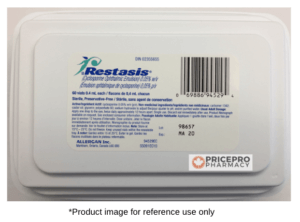
The active ingredient in this medication is cyclosporine and it is available in a 0.05% strength manufactured by Allergan. Restasis is available as sterile single-use plastic vials as well as a multi-dose bottle.

The single use-vials are packaged as a box with 30 vials or 60 vials and the multi-dose bottle is 3ml(s). To find the best prices on Restasis, click on "CHECK PRICES" above to compare both brand and generic cost. Also be use our Restasis coupon to save $15 off you order.

There is a Restasis generic available from Canada manufactured by Teva which is another affordable option for those suffering from dry eye.

For more details on Restasis, read more information on: Dosage, Side Effects, Warnings and Precautions, and Interactions below from our certified medical writer.

discount prescription drugs online

Restasis Dosage

The following dosage is available to order online:

  • Restasis 0.05%

This medication is available in pack size of 30 vials and is manufactured by Allergan Inc. The active medicinal ingredient is called Cyclosporine.

prescription drug prices

Restasis Cost

At PricePro Pharmacy the low cost of Restasis is:

  • $144.00 for 60 vials

While, the average retail price of Restasis vials in the United States is:

  • $730.59 for 60 vials

You can save up to 80% when  you order your Restasis eye drops from PricePro Pharmacy.  This price is available without coupons or insurance coverage.

Another way to save on your Restasis prescription is by placing an order for a 90-day supply of medication compared to a one-month supply.

Rx Coupons

Restasis Coupon

Apply Restasis coupon code RST15 - $15 instant savings on your order!

Take advantage of our Restasis discount coupon for additional savings on your first order.

You don't need need insurance coverage to take advantage of this low pricing.

So not only we do offer drug prices that are up 80% lower than your local pharmacy but to make things better we offer pharmacy coupons.

You can also apply this coupon code to the generic Restasis option.


Lower cost generic drug alternative

Restasis Generic

We offer a generic for Restasis known as Cyclosporin in the following option:

  • Cyclosporin 0.05% vials

A generic drug is a medication that has exactly the same active ingredient as the brand name drug and provides the same therapeutic effect. They are allowed for production after the patent for the brand medication has expired and therefore costs much less.

prescription delivery across USA

Shipping Times

The estimated shipping time for your order is:

  • 7 to 10 business days (Product of Canada)
  • 7 to 12 business days (Product of United Kingdom)
  • 10-18 business days (Product Australia, India and Turkey)

The standard shipping cost $9.95 for all orders.

For drugs ordered from Canada, we offer an Express shipping option. The shipping fee is $25 with an estimated delivery time of 3 to 5 business days.

Once you order ships from the licensed pharmacy you will receive an email notification with the applicable shipping details.


online prescription refill

Prescription Refill

Our free refill reminder service is a great bonus when you register with us. We provide friendly reminders by phone or email.

You can login to your online pharmacy account and view your previous order history and see which active prescriptions you have on file.

A refill can be placed online, through chat, or by calling 1-855-776-0079.

Restasis (Cyclosporine Ophthalmic) Medication Information

Uses

Restasis ophthalmic emulsion is a prescription eye drop medication. It is used to treat chronic (long-term) dry eye syndrome in people ages 16 years and older.  With this condition, your eyes don’t make enough tears to protect the eye’s surface.  This causes inflammation, which leads to fewer tears being produced.

Restasis is FDA-approved to increase tear production in people with chronic dry eye syndrome due to eye inflammation. 

Dosage

Restasis ophthalmic emulsion comes in one strength: 0.05% and comes as packages of sterile, preservative-free vials.  Restasis packages include 30 single-use vials per tray.

Wash hands before and after using Restasis.  Before using, turn the single-use vial upside down a few times to mix the emulsion.  Tilt your head back, then without touching the vial tip, instill one drop of medication into your eye.  Gently close your eyes immediately after putting in the drop.  Apply light pressure to the inner corner of your eye for at least one minute.  This will help keep the drop in your eye while the medication gets absorbed. Discard unused portions of vial immediately after administration.  

The usual dosage of Restasis is one drop into one or both eyes twice daily, approximately 12 hours apart.  Take Restasis exactly as prescribed by your doctor. 

Precautions

Restasis may not be safe for people with the following medical history or conditions:

  • Allergic to cyclosporine or any other ingredients in Restasis
  • Breastfeeding, pregnant or planning to become pregnant

Side Effects

When using Restasis, side effects can occur in some people.  The most common side effects of Restasis are usually mild and temporary.  But, if these side effects persist or get worse, you should talk with your doctor.

Common side effects of Restasis may include:

  • Eye burning or stinging
  • Eye pain
  • Eye redness
  • Headache
  • Dizziness

Get emergency medical care right away if you experience any of the following:

  • Signs of an allergic reaction (rash, hives, blistered or peeling skin, trouble breathing, unusual hoarseness, swelling of the face, lips, tongue, or throat)
  • Changes in eyesight
  • Numbness or tingling skin 
  • Seizures

For questions about the risks and benefits of using Restasis, talk to your doctor or pharmacist.

Interactions

There are possible drug interactions that may occur with Restasis.  A few examples include:  

  • Certain diuretics, such as amiloride, spironolactone
  • Drugs that weaken the immune system, such as natalizumab, rituximab
  • Grapefruit or grapefruit juice
  • Orlistat
  • Tacrolimus

Talk to your doctor or pharmacist before taking other medications, eye drops, or herbal supplements with Restasis.

Storage

Keep Restasis stored at room temperature (15 °C to 25 °C/ 59° F to 77 °F).  Keep this and all medications in a safe place, away from children and pets.  Single-use vials should be stored in the foil pouch until ready for use.  

Pharmacists Tips

  • Separate Restasis from other eye drops by at least 15 minutes. 
  • Do not administer this medication while wearing contact lenses.
  • Remove contact lenses before using Restasis, and wait at least 15 minutes after administering Restasis to put them back in.

Restasis FAQs

How long does Restasis take to work?

While individual results vary, it can take three to six months of Restasis treatment for your eyes to begin producing tears on their own.  There is no permanent cure for Chronic Dry Eye Syndrome.  But with daily use, Restasis can help increase your own real tear production to relieve the discomforts of this condition.


How is Restasis different from over-the-counter eye drops such as artificial tears?

Restasis is not like over-the-counter eye drop products that contain artificial tears.  Artificial tear products offer temporary relief for dry eyes, but Restasis helps your eyes increase their own natural tear production.  

Related Drugs

References

Restasis Prescribing Information. Irvine, CA: Allergan USA Inc.

https://media.allergan.com/actavis/actavis/media/allergan-pdf-documents/product-prescribing/Combined-Restasis-and-MultiDose-PI_8-3-17.pdf

Accessed January 24, 2021.

Mark I. Golden; Jay J. Meyer; Bhupendra C. Patel.  Dry Eye Syndrome.  Treasure Island, FL:  StatPearls Publishing; 2020. https://www.ncbi.nlm.nih.gov/books/NBK470411/

Accessed January 24, 2021.

PharmD Medical Writer

Author: Dr. Patricia Weiser, PharmD

Patricia Weiser, PharmD, is a licensed pharmacist and medical writer.  She has clinical experience in community and hospital pharmacy.  Patricia is a 2007 graduate of the University of Pittsburgh. She resides in Pennsylvania with her husband and two daughters.

View Linkedin profile